Age-related blood condition linked to three eye diseases
Compared with people without the condition, relative diagnosis rates (hazard ratios) were 1.08 for cataract, 1.12 for macular degeneration and 1.48 for diabetic retinopathy.
Our read
Populations- Studied:
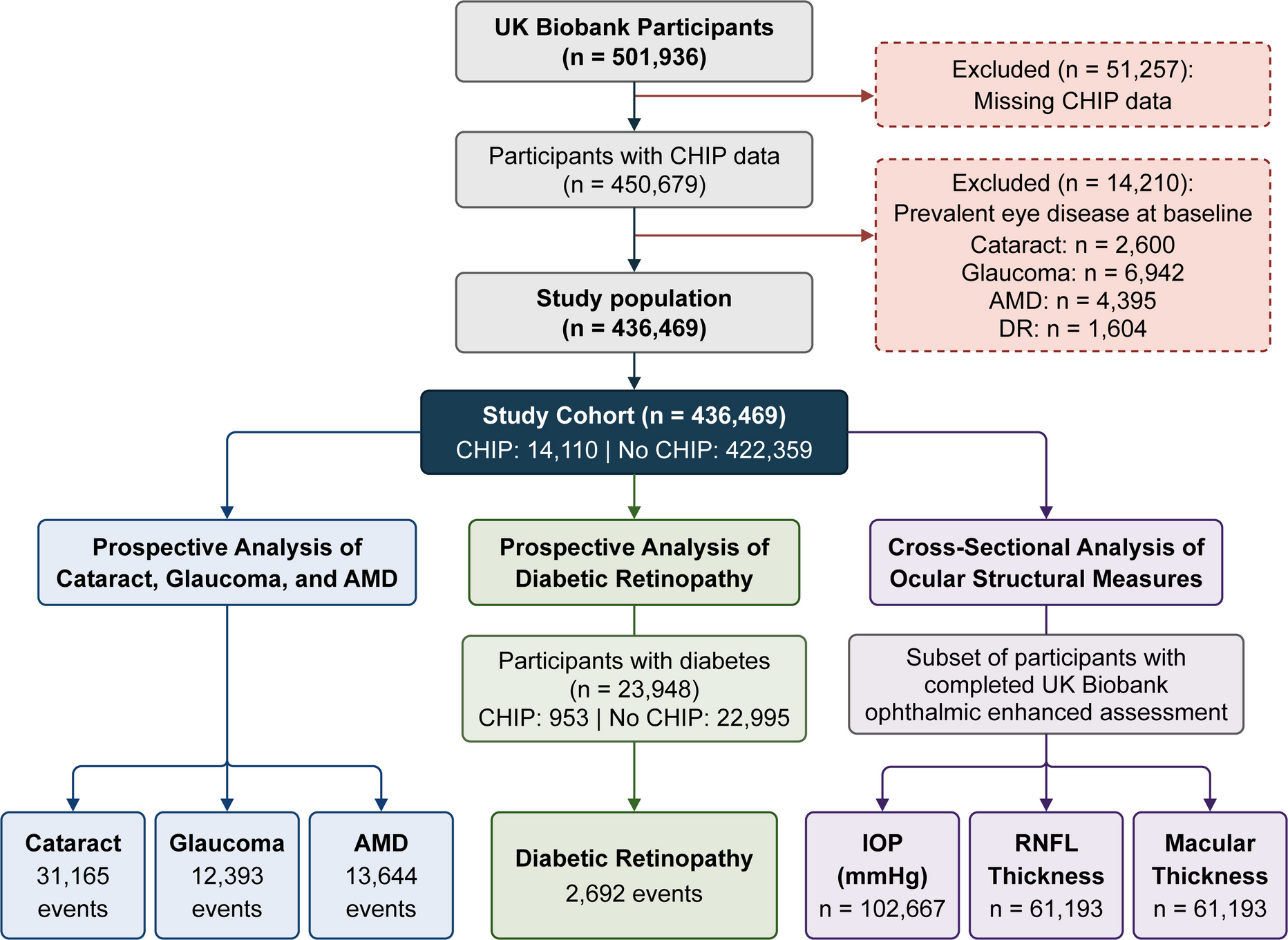
- Cohort study of 436,469 UK Biobank participants, median 14.4 years, against people without CHIP
- What changed:
- Diagnosis rates were higher with CHIP than without: hazard ratios 1.08 for cataract, 1.12 for macular degeneration, 1.48 for diabetic retinopathy
- The catch:
- Electronic health records can miss eye disease that has not been diagnosed
- In the record:
- The 300th paper on clonal hematopoiesis of indeterminate potential with results in people; 699 on record in all.
Editor of record: Boris Djordjevic · AgingResearch.News
UK Biobank participants—436,469 people averaging 56.4 years old, 54.5% women—were followed in a cohort study. DNA sequencing identified 14,110 with clonal hematopoiesis of indeterminate potential, an age-related expansion of blood cells carrying acquired mutations. Electronic health records tracked diagnoses over a median 14.4 years.
The condition was linked to cataract, clouding of the eye’s lens; age-related macular degeneration, which harms central vision; and diabetic retinopathy, diabetes-related damage to the light-sensitive tissue at the back of the eye. The retinopathy analysis included only people with diabetes. Glaucoma, which damages the nerve connecting the eye to the brain, had no clear link overall: the range of likely values included no difference. A link appeared among people without high blood pressure. Except for diabetic retinopathy, the authors described the associations as small.
Why it matters
For diseases that threaten vision with age, the findings support studying whether a blood-based risk marker could add to eye-health assessments.
Caveats
Other health differences between participants with and without the blood condition could have contributed to the associations despite statistical adjustments. The diabetic eye-disease finding concerns people with diabetes, not those without it.
Comments
Be the first to comment.