Menopause stage linked to brain response differences in women
After stimulation, brain-to-muscle responses rose 48% from baseline before menopause; the 32% rise in hormone therapy users was not statistically significant.
Our read
Mechanisms- Studied:
- Preprint: cross-sectional study of 46 people
- In the record:
- The 55th paper on hormone therapy with results in people; 143 on record in all.
Editor of record: Boris Djordjevic · AgingResearch.News
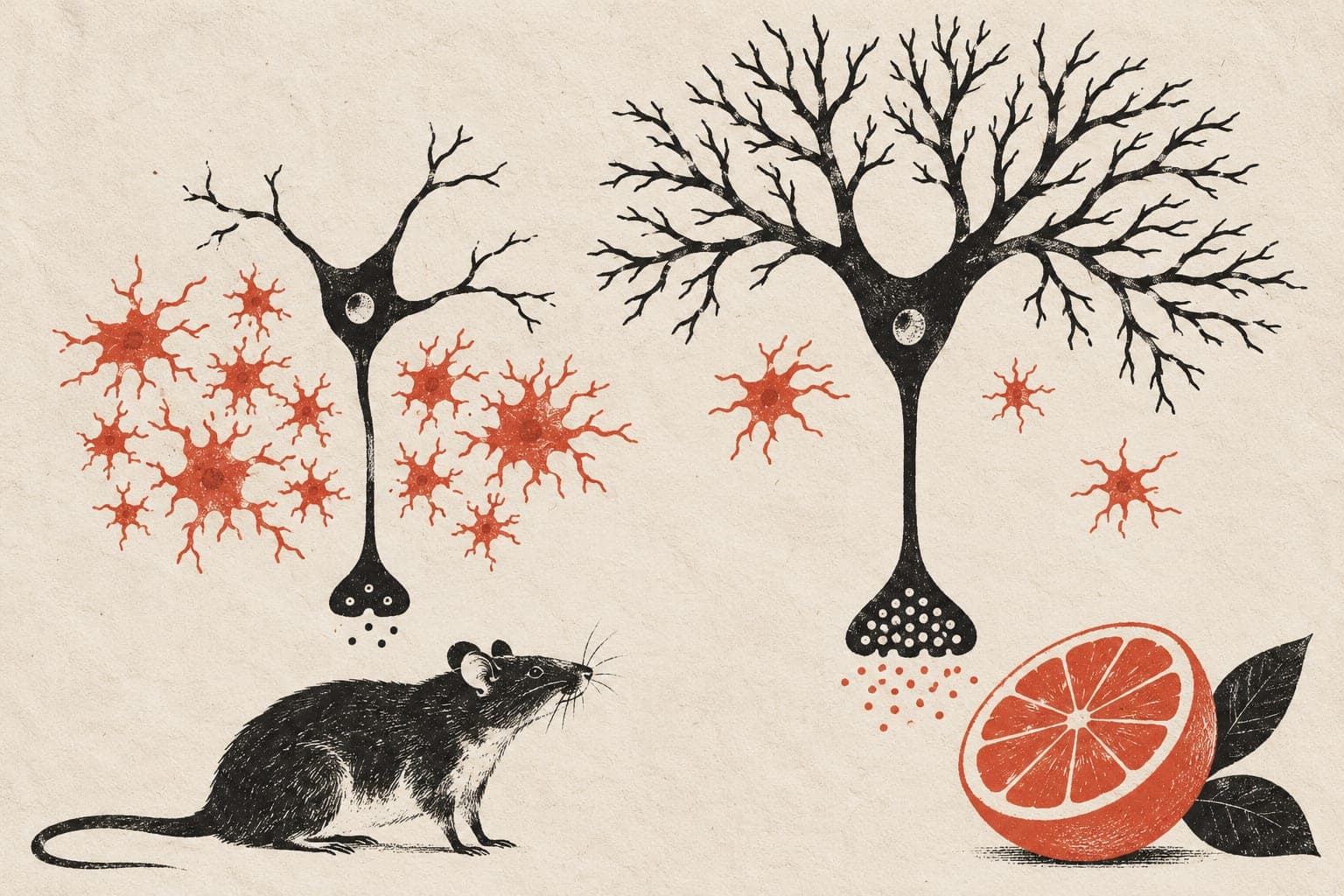
Forty-six women at two sites took part in an observational study of the brain region that controls movement. They were grouped as before, during or after menopause, or as users of continuous combined hormone therapy. Their average ages were 28, 50, 60 and 52 years, respectively. Researchers measured brain-to-muscle responses before and 10 and 30 minutes after a paired-stimulation protocol. This tested plasticity, the brain's ability to change its responses.
Responses increased significantly after stimulation in women before menopause, but not in those during or after it. Hormone therapy users had greater responses than the during- and after-menopause groups, although their own increase was not statistically significant. Across all participants, the size of the response was not associated with any single measured hormone or chronological age.
Why it matters
Menopause-related differences in brain plasticity may matter for learning movements and rehabilitation across women's adult lives, the authors suggest.
Caveats
Comparing existing hormone therapy users with other women leaves open whether therapy itself accounted for their different responses. This preprint has not been peer-reviewed.
The paper
Northumbria University; Nottingham Trent University
bioRxiv, Nov 16, 2026, Open access, CC BY, Preprint, not yet peer-reviewed
Comments
Be the first to comment.